

Leather vs Fabric Upholstery: Which Fits Your Home?
- ahartupholstery
- Aug 6
- 6 min read
A sofa may be the visual anchor of a room, but its upholstery determines far more than its appearance. In the leather vs fabric upholstery decision, the right answer depends on how the piece will be used, the character of the room, and the level of care you are prepared to give it. A material that looks exceptional in a formal Naples living room may not be the best fit for a busy family room in Cape Coral or a high-traffic hospitality setting.
The most successful choice is rarely about declaring one material universally better. It is about selecting the right grade, construction, color, and finish for the furniture beneath it and the life that happens around it.
Leather vs Fabric Upholstery: Start With How You Live
Leather and fabric create distinctly different experiences. Leather has a tailored, architectural presence. It can make a substantial sofa feel cleaner-lined and more sculptural, while its natural surface develops character over time. Fabric offers greater softness, texture, and visual range, from quiet linen blends to richly woven velvets and performance textiles designed for active households.
For homeowners, the question often begins with daily use. Do children lounge on the sectional after school? Does a dog claim the window seat? Is the chair in a quiet bedroom, or does it serve a living room that hosts frequent guests? For designers and commercial clients, the calculation also includes light exposure, maintenance staff, turnover, brand identity, and the expected service life of the piece.
A beautiful upholstery material should support the room's purpose rather than require the room to be treated like a museum.
The Case for Leather
Leather is valued for its longevity, distinctive hand, and ability to age with grace when it is properly selected and maintained. Quality leather is not a single category. Full-grain, top-grain, corrected-grain, aniline, semi-aniline, and protected leathers can look and perform very differently. That distinction matters when investing in custom upholstery or restoring a well-built piece.
A tailored look that gains character
Leather naturally suits interiors with refined, edited lines. It works especially well on club chairs, dining chairs, benches, office seating, and sofas with strong frames and crisp tailoring. A high-quality hide can reveal subtle variations in grain and tone, which lend authenticity rather than uniformity.
Over time, leather develops a patina. On the right piece, this evolution is part of the appeal. A warm brown library chair or a deeply upholstered lounge chair can become more handsome through years of use. However, those who want a surface that remains perfectly consistent may prefer protected leather or a fabric with a more stable visual finish.
Day-to-day cleaning is often simpler
For many households, leather's lack of a woven surface is a practical advantage. Pet hair, crumbs, and many everyday spills can be wiped away promptly, making leather appealing for dining seating and family rooms. It does not trap dust and allergens in the same way fabric can, although regular cleaning remains essential.
That convenience should not be mistaken for indestructibility. Sharp objects can scratch leather, body oils can darken headrests and arm areas, and prolonged sunlight can fade or dry the surface. In Southwest Florida, rooms with expansive windows deserve special consideration. Window treatments, furniture placement, and the leather's finish all affect long-term performance.
Comfort changes with the environment
Leather responds quickly to temperature. It may feel cool when the air conditioning is running and warm in a sunlit room. Some people appreciate this responsive feel; others prefer the immediate softness and warmth of fabric. Leather also has less surface grip, which can matter on deeply relaxed seating where people tend to curl up or recline.
The cushion construction beneath the leather is equally important. A premium hide cannot compensate for worn springs, compressed foam, or poor suspension. Reupholstery is an opportunity to address the entire seating system, not just the visible covering.
When Fabric Is the Better Choice
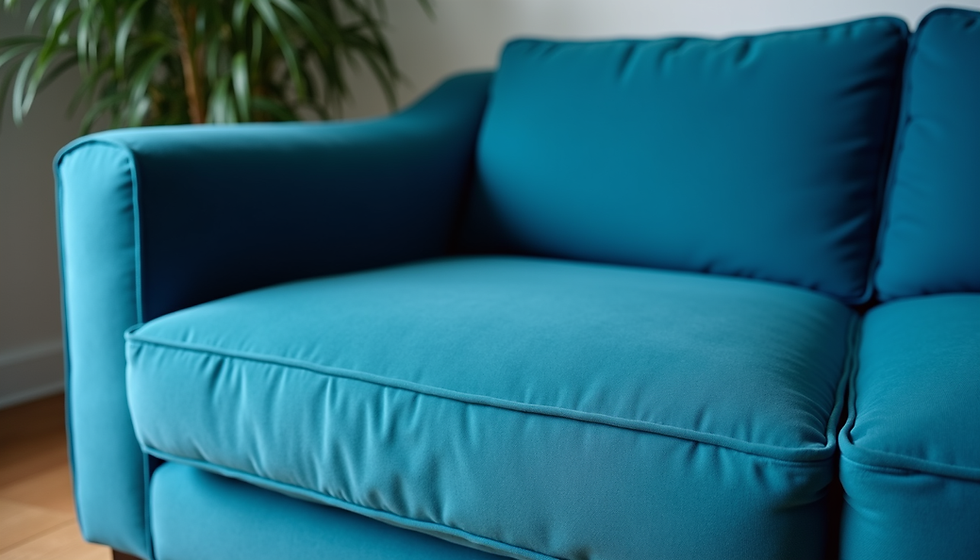
Fabric upholstery offers remarkable freedom. It can be understated or expressive, smooth or tactile, traditional or contemporary. For clients building a layered interior, fabric often provides the detail that makes a room feel personal and complete.
More options for color, pattern, and texture
Fabric makes it easier to introduce subtle color shifts, woven dimension, pattern, and softness. A neutral performance bouclé can add depth to a contemporary chair. A tailored stripe can bring order to a breakfast banquette. A small-scale print may give an inherited occasional chair a fresh role in a new interior.
This variety is especially valuable when matching an existing scheme. Drapery, rugs, wall color, wood finishes, and decorative pillows all influence the ideal upholstery selection. Fabric can either disappear elegantly into a layered room or become the defining visual statement.
A softer, more relaxed feel
Many people simply find fabric more inviting. It is generally warmer to the touch, less slippery, and available in constructions that range from crisp and structured to plush and enveloping. For large sectionals, bedroom seating, and family-room chairs, those tactile qualities often shape how often a piece is used.
Fabric can also be the more forgiving option when a sofa needs to feel relaxed rather than formal. The key is choosing a material appropriate to the frame. A finely tailored antique chair may call for a tightly woven textile with enough body to hold its lines, while a modern lounge piece may benefit from a softer fabric that complements its proportions.
Performance fabric has changed expectations
Not all fabric requires delicate handling. High-quality performance fabrics can offer strong resistance to staining, fading, abrasion, and moisture while still feeling sophisticated. They are particularly useful for homes with children or pets, as well as restaurants, lobbies, healthcare spaces, and vacation properties where durability is central to the specification.
Still, performance is not a promise that every mark will vanish. Cleaning methods vary by fiber and finish, and some stains require professional attention. Before selecting a textile, review its cleaning code, abrasion rating, lightfastness, and suitability for the intended application. A fabric appropriate for decorative pillows may not be suitable for a restaurant banquette.
Durability Depends on Quality, Not Just Material
A common mistake is treating leather as automatically durable and fabric as automatically fragile. Both assumptions overlook the quality of the material and the craftsmanship of the upholstery work.
A thin, heavily finished leather may not wear as well as a carefully specified commercial-grade fabric. Likewise, a delicate natural fiber may be entirely appropriate for a low-use sitting room but unsuitable for a household's primary sofa. The frame, webbing or spring system, cushion fill, stitching, and how the material is applied all contribute to longevity.
At Ahart Upholstery, material selection is considered alongside the furniture's construction and intended use. A structurally sound heirloom or premium frame can often be restored to a standard that exceeds many new retail pieces, provided the upholstery, support system, and finish work are approached as one complete project.
Consider Maintenance Before You Commit
Leather benefits from routine dusting, prompt attention to spills, and periodic conditioning with products suitable for its specific finish. Avoid harsh household cleaners and place leather thoughtfully in rooms with direct sun or significant heat exposure.
Fabric needs regular vacuuming with an upholstery attachment to remove dust and grit that can wear down fibers over time. Rotate loose cushions when possible, address spills according to the manufacturer's guidance, and consider professional cleaning for heavily used upholstery. Removable cushion covers can be helpful, but they are not always washable and should never be assumed to be machine-safe.
For both materials, a well-fitted slipcover or a thoughtfully placed throw can protect a favorite seat without diminishing the room. The goal is not to hide fine upholstery, but to preserve it where daily habits create concentrated wear.
Choosing for Southwest Florida Interiors
Southwest Florida adds practical considerations to the leather vs fabric upholstery conversation. Intense daylight, humidity, sandy feet, poolside living, pets, and frequent entertaining all influence the best specification. Protected leather can be an excellent choice for a polished, easy-to-wipe dining chair or office setting. Performance fabric may be better for a sunlit family room, a casual coastal sectional, or cushions that need to handle regular use.
For covered outdoor spaces, use materials specifically engineered for exterior conditions. Indoor leather and standard residential fabrics are not substitutes for outdoor-rated upholstery, even on a screened lanai. Moisture, ultraviolet exposure, and mildew risk require purpose-built materials and construction details.
A sample viewed in the studio can look quite different in a home filled with afternoon light. Evaluate it near windows, beside flooring and wall color, and against the wood or metal finishes in the room. This small step prevents costly surprises and leads to a more considered result.
Let the Furniture Lead the Decision
The best upholstery selection respects the furniture itself. A leather hide may highlight the strong silhouette of a hand-built chair, while a woven fabric may bring back the softness and period detail of an heirloom sofa. Neither choice should be made from a swatch alone.
Bring the decision back to the piece you want to live with for years: how it feels when you sit down, how it will look in changing light, and how beautifully it will carry the marks of a well-used home.

Comments