

Is Performance Fabric for Sofas Worth It?
- ahartupholstery
- Jul 19
- 6 min read
A beautiful sofa should not become a source of anxiety the moment a guest sets down a drink, a child climbs aboard, or a wet swimsuit comes through the door. For many homes in Cape Coral and across Southwest Florida, performance fabric for sofas offers a more practical way to enjoy a tailored interior without treating the living room like a museum.
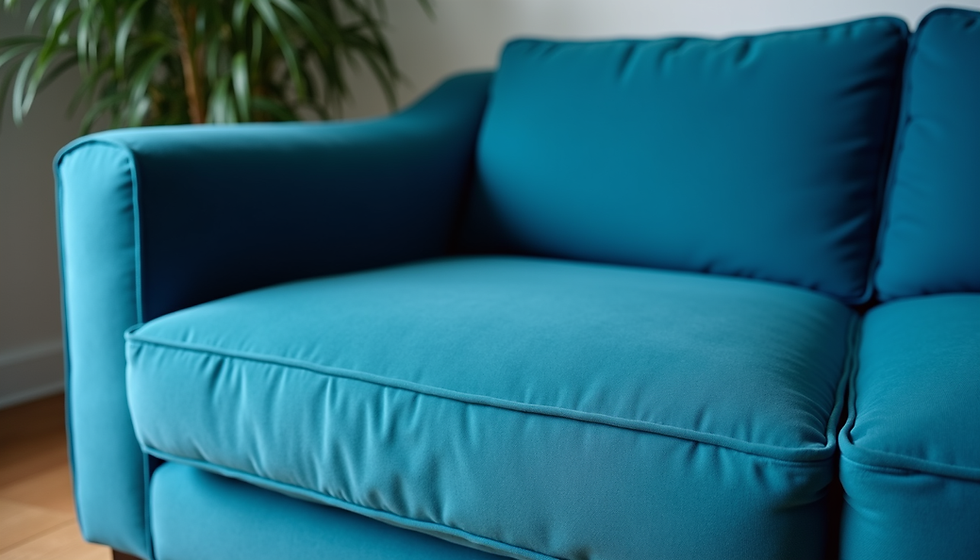
The category has grown well beyond stiff, overly synthetic-looking upholstery. Today’s better performance textiles can have the hand of linen, velvet, chenille, bouclé, or woven cotton while offering meaningful resistance to stains, moisture, fading, and abrasion. The right choice depends on how a sofa is used, where it sits, and the level of finish the room calls for.
What Makes a Sofa Fabric “Performance” Fabric?
Performance fabric is designed to withstand the stresses that cause ordinary upholstery to show its age: repeated sitting, friction, spills, soil, sunlight, and frequent cleaning. Its durability may come from the fiber itself, a protective finish applied to the surface, or a combination of both.
Many premium options use solution-dyed synthetic fibers, especially acrylic, polyester, or olefin. Color is integrated into the fiber during manufacturing rather than applied to its surface afterward. This typically improves fade resistance, an important consideration in Florida homes with generous windows, glass doors, and strong afternoon light.
Other textiles rely on advanced stain-resistant technologies that help liquids bead at the surface long enough to be blotted. That does not mean a fabric is indestructible, nor does it mean every spill can be ignored. Red wine, cooking oils, ink, sunscreen, and pet accidents still deserve prompt attention. But a well-selected performance textile gives homeowners a far better margin for error than many natural fibers or untreated weaves.
Why Performance Fabric for Sofas Makes Sense in Southwest Florida
Southwest Florida presents a distinct set of upholstery challenges. Sand travels indoors. Humidity changes the feel of a room. Bright sun can fade unprotected materials quickly. Families and seasonal guests often move between patios, pools, kitchens, and living spaces without much ceremony.
A performance fabric can be especially valuable on a sofa in a casual great room, a waterfront residence, a vacation property, or a high-traffic family room. It allows the piece to support everyday life while retaining the tailored appearance expected in a thoughtfully designed home.
For commercial spaces, the calculation is even more direct. Hospitality seating, office lounges, retail fitting areas, and restaurant banquettes need materials that can tolerate frequent contact and routine maintenance. A fabric that looks polished on installation day but pills, fades, or stains within a season is not a luxury choice, regardless of its initial price.
Still, durability should not be the only criterion. A sofa is visually dominant, physically intimate, and often used for hours at a time. Texture, color, drape, cushion construction, and the quality of the upholstery work all affect whether the finished piece feels exceptional.
The Benefits - and the Trade-Offs
The obvious advantage is cleanability. Most performance fabrics are easier to maintain after common household spills, provided the spill is addressed quickly and according to the manufacturer’s instructions. They also tend to resist wear better than delicate textiles in active settings.
Fade resistance is another major benefit. Even with window treatments and UV-protective glass, sunlight is difficult to avoid in Florida. A solution-dyed performance fabric can help a sofa maintain its intended color where a standard cotton, linen, or silk blend might gradually shift.
There are trade-offs. Some performance fabrics have a more casual character than a finely woven natural textile. Others can feel slightly less breathable or may develop a sheen over time, depending on the weave and fiber content. A fabric marketed as stain resistant may also have specific cleaning limitations, particularly when it comes to solvents, bleach, or steam.
There is also a difference between abrasion resistance and stain resistance. A fabric may test exceptionally well for wear but still be a poor fit for a household with pets, messy snacks, or frequent entertaining. Conversely, a very stain-resistant fabric may not have the texture or visual depth desired for a formal room. The specification must match the use.
Choosing the Right Fabric for How You Live
The best starting point is not a color card. It is an honest conversation about the sofa’s role in the home.
A family sofa used every evening calls for a forgiving weave with strong stain resistance and a texture that does not easily catch or snag. If dogs are part of the household, avoid loose open weaves that can trap hair or invite claw pulls. Tighter woven textures, low-pile velvets, and certain chenille-style performance fabrics are often more suitable, though no upholstery is fully immune to determined pets.
For a formal living room that sees occasional use, the priority may shift toward hand, richness, and visual nuance. Performance fabric can still be wise, particularly near windows, but the fabric can be selected with more attention to its decorative qualities and less concern about extreme daily wear.
In a vacation residence or rental property, select materials that are straightforward to maintain and unlikely to show every small mark between visits. Mid-tone colors, heathered yarns, and subtle patterns tend to be more forgiving than bright solids or very pale shades. They also preserve a refined appearance without making a room feel overly cautious.
Consider Color Beyond the Swatch
A small sample does not reveal how a color will behave across an eight-foot sofa. Pale ivory may be elegant, but it will show denim transfer, pet paw marks, and everyday handling more readily than a warm taupe, soft mineral gray, or textured neutral.
Dark colors bring their own considerations. Navy, charcoal, and deep green can be dramatic and sophisticated, but lint, dust, and salt residue may be more visible. A textured weave or a quiet multi-tone ground often offers the best balance between elegance and practicality.
Ask About Cleaning Before You Commit
Every fabric line has its own care requirements. Before a sofa is upholstered, confirm the recommended cleaning method and whether the manufacturer permits water-based cleaners, mild soap, solvent products, or diluted bleach solutions. Keep those instructions with your household records rather than relying on memory after a spill occurs.
Routine care is simpler: vacuum gently with an upholstery attachment, rotate loose cushions when appropriate, and blot spills rather than rubbing them deeper into the fibers. Avoid saturating cushions, especially if the fabric is applied over natural-fill or foam-and-down constructions.
Performance Does Not Replace Quality Upholstery
Even the finest fabric cannot correct weak springs, collapsed cushion cores, loose joints, or poor pattern alignment. In reupholstery, the underlying structure should be evaluated before fabric selection begins. A structurally sound frame can often be restored into a piece that performs beautifully for years, while an inferior frame may not justify premium materials.
Craftsmanship also matters at every visible edge. Pattern placement, welting, seam tension, cushion fit, skirt proportion, and the treatment of corners all influence the final result. On a custom project, the fabric must be cut and applied with the same care that went into choosing it.
At Ahart Upholstery, material selection is approached as part of the larger design and restoration process. A sofa’s frame, cushion comfort, room exposure, intended use, and surrounding finishes should inform the recommendation. That level of consideration helps avoid the common mistake of choosing a fabric that looks right in a showroom but feels wrong in the finished room.
When a Different Material May Be Better
Performance fabric is an excellent choice for many sofas, but it is not automatically the right answer. If the goal is a highly formal heirloom piece in a low-traffic room, a natural linen, wool, mohair, or silk blend may offer a character that no performance alternative fully replicates. These fabrics can be beautiful, but they ask for more careful use and professional maintenance.
Likewise, if a sofa will live on a covered lanai or in a space exposed to significant moisture and outdoor conditions, indoor performance fabric may not be sufficient. True outdoor-rated textiles are engineered differently and should be selected for that environment.
The most enduring interiors make room for both beauty and real life. Choose a sofa fabric that supports the way your household actually gathers, rests, entertains, and uses the room - then let skilled upholstery work give that material the finish it deserves.

Comments