
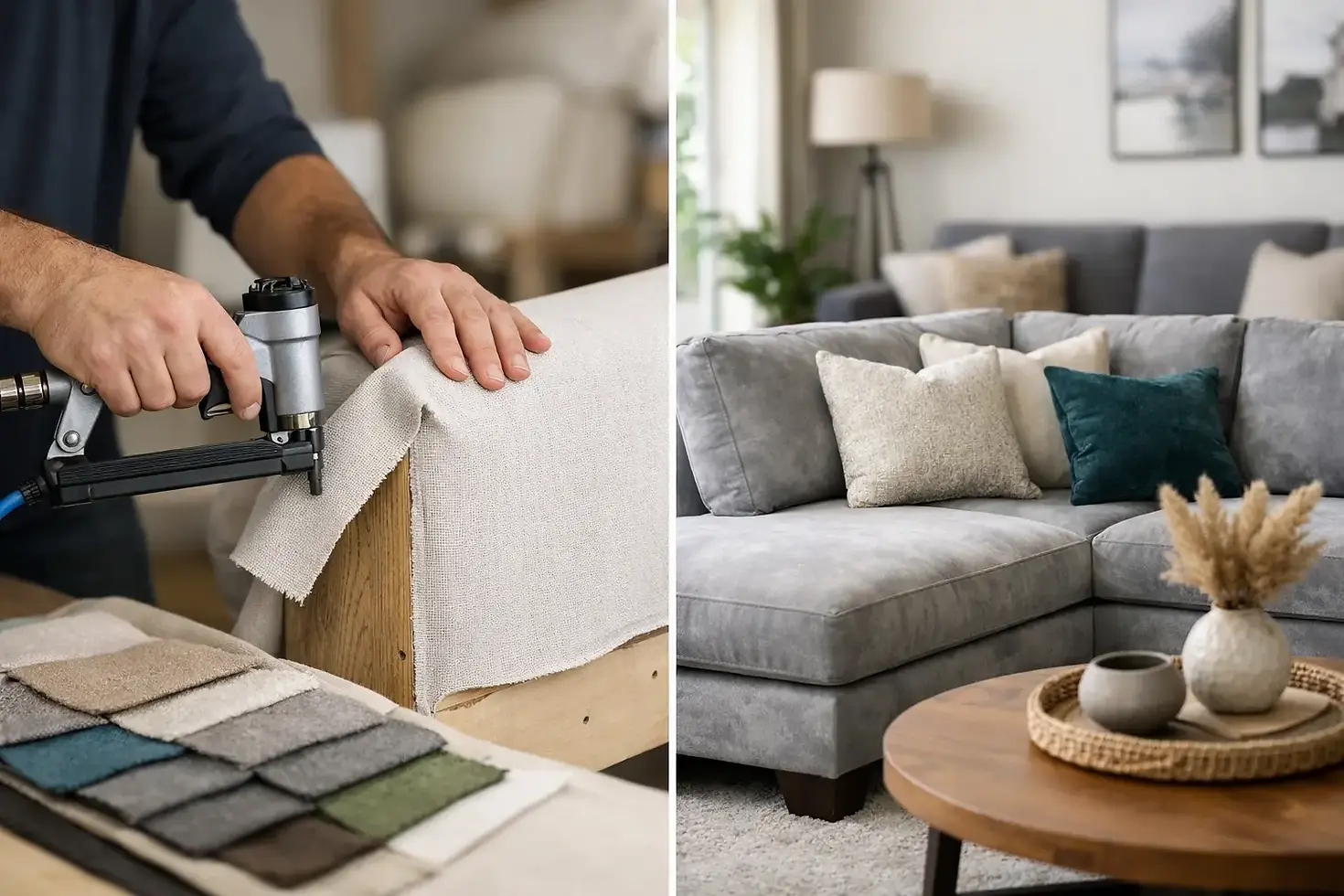
Custom Sofa Upholstery That Fits Your Home
- ahartupholstery
- Jul 15
- 5 min read
A sofa can be the most used piece in a home and still be the hardest one to replace. Its frame may be exceptionally built, its proportions may suit the room perfectly, and its history may matter as much as its appearance. Custom sofa upholstery gives that piece a second life, with comfort, fabric, and finishing details chosen for the way you actually live.
For homeowners and design professionals in Cape Coral and across Southwest Florida, the decision is rarely as simple as choosing a new color. Upholstery is an opportunity to preserve a well-made frame, correct years of wear, and create seating that belongs in the room rather than merely filling it.
What Custom Sofa Upholstery Really Changes
Quality reupholstery goes far beyond replacing worn fabric. The process can address the entire upholstered system: the frame, webbing or springs, seat support, cushioning, padding, fabric, trim, and tailoring. Each layer affects how the sofa feels, performs, and holds its shape over time.
A sofa with sagging seats, flattened backs, loose arms, or fabric that has faded in the Florida sun may still have an excellent hardwood frame beneath the surface. When the structure is sound, rebuilding the upholstery often provides a more enduring result than buying a new mass-produced sofa with unknown construction.
The visual change is equally significant. A tailored linen blend can make a traditional silhouette feel lighter and more current. A velvet with a subtle sheen can add depth to a formal living room. A tightly woven performance fabric may give a family room the refined look it needs without making everyday spills a source of worry. The right choice depends on the room, the architecture, the light, and the people using the furniture.
When Reupholstering Is the Right Investment
Not every sofa should be reupholstered. A low-cost frame with cracked particleboard, weak joints, or little structural value may not justify the labor and materials involved. In those cases, replacement can be the practical choice.
But reupholstery is often worth considering when a sofa has a solid hardwood frame, quality joinery, comfortable proportions, or sentimental and design value. It is especially compelling for heirloom furniture, vintage pieces, designer sofas, and custom-built seating that would be difficult to replace at the same level of quality.
Designers also turn to custom upholstery when a project calls for a particular scale, fabric match, or construction detail that ready-made furniture cannot provide. A beautiful room can lose its balance if the sofa is too deep, too low, or too visually heavy. Retaining the right frame and changing its materials can preserve the room's proportions while bringing the design forward.
In Southwest Florida, climate adds another consideration. Humidity, intense sunlight, sandy feet, pets, poolside living, and frequent entertaining all affect upholstery choices. A fabric that performs beautifully in a lightly used northern home may not be appropriate for a sun-filled great room in Naples or a busy waterfront residence in Fort Myers.
The Construction Beneath the Fabric Matters
The most successful projects begin with an honest assessment of the sofa's condition. Fabric can conceal problems for a while, but it cannot correct a loose frame, broken spring, deteriorated foam, or uneven support system.
During a professional evaluation, the upholsterer should examine frame stability, joints, spring or webbing condition, cushion cores, seat deck integrity, and the existing upholstery layers. This review determines whether the work should focus on cosmetic renewal or include repairs and rebuilding.
Frame and Support Repairs
A sofa that creaks, shifts, or feels uneven may need joint reinforcement before new upholstery is installed. Worn webbing and fatigued springs can create the familiar sinking feeling that many homeowners assume is caused only by old cushions. Correcting support from the inside out restores a more stable, comfortable seat.
Cushion Comfort Is a Design Decision
Cushions are not one-size-fits-all. Higher-density foam offers structure and resilience, while softer constructions create a more relaxed sit. Down-wrapped cushions provide a luxurious hand but typically require regular fluffing and maintenance. A carefully chosen blend can balance a tailored appearance with the level of softness a client prefers.
This is where personal use matters. A formal sitting room may favor a crisp, shaped cushion. A family room used every evening may need firmer support and forgiving materials. There is no universally best cushion - there is only the construction that suits the sofa's purpose.
Choosing Fabric for Beauty and Daily Life
Fabric selection is one of the most enjoyable parts of a custom project, but it should be guided by performance as well as appearance. The sample that looks perfect in a showroom can read differently under direct coastal light or alongside existing flooring, paint, and drapery.
Consider the fabric's weave, fiber content, texture, color variation, cleaning requirements, and resistance to fading and abrasion. Performance fabrics are often a wise choice for homes with children, pets, or frequent guests, yet they are not all alike. Some have a soft, natural look; others are better suited to casual spaces than formal interiors. A knowledgeable upholsterer can help narrow options without sacrificing the intended design.
Pattern requires particular care. Large-scale motifs, stripes, plaids, and directional textures demand additional planning so the design aligns correctly across seat cushions, backs, arms, and skirt panels. Pattern matching uses more yardage and more labor, but the finished piece has a precision that is immediately visible.
Details such as contrast welting, decorative nailheads, channeling, tufting, button placement, skirt style, and exposed wood finishes also shape the final character of the sofa. These are not afterthoughts. They are the details that turn an attractive fabric into a cohesive piece of furniture.
A Better Process Produces a Better Sofa
Custom work should feel considered from the first conversation. Before fabric is selected, it helps to discuss how the sofa is used, who uses it, what needs to be retained, and what should change. A room's palette and surrounding materials are part of that discussion, as are practical concerns such as pets, sun exposure, and maintenance expectations.
Once the scope is clear, the sofa is carefully stripped to its frame so hidden conditions can be addressed. Repairs, support work, and cushion rebuilding take place before new padding and fabric are applied. The final upholstery is then cut, sewn, fitted, and hand-finished to suit the frame and chosen design details.
This measured approach is especially valuable for designers, contractors, and commercial clients. Residential projects require sensitivity to personal style and comfort. Hospitality, office, restaurant, and retail seating also need attention to traffic patterns, cleanability, code considerations when applicable, and the ability to maintain a polished appearance over time.
Ahart Upholstery approaches these projects as both restoration and custom furnishing work, bringing classical training and luxury-interiors experience to pieces that deserve more than a surface-level update. The objective is not to make a sofa look newly covered. It is to make it feel intentionally rebuilt.
Questions to Settle Before You Commit
Before approving a reupholstery project, ask whether the frame is worth preserving, what comfort changes are needed, and how demanding the room will be on the fabric. It is also wise to confirm whether cushions will be rebuilt, whether repairs are included, and how pattern matching or trim details may affect material requirements.
If timing matters, discuss the project schedule early. Custom upholstery involves skilled labor and ordered materials, and the right work should not be rushed simply to meet an arbitrary date. For commercial installations or design projects with several pieces, clear coordination from the outset protects both the finish quality and the overall schedule.
A well-built sofa has earned the right to evolve with your home. With the right materials, structural attention, and craftsmanship, it can continue serving the room beautifully for many years while reflecting the way you live now.


Comments