
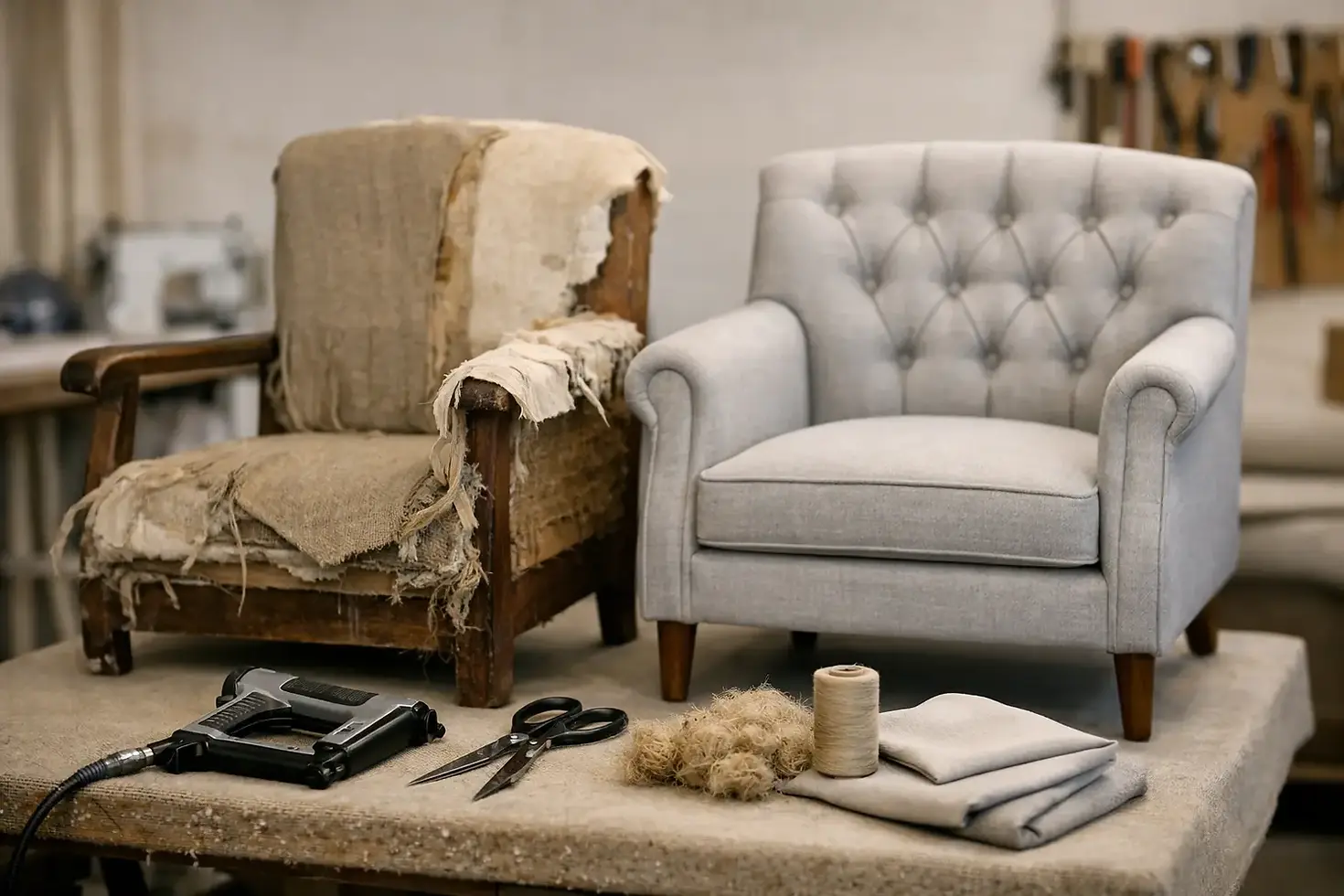
Is It Worth Reupholstering Furniture?
A sofa that sags, a chair with faded fabric, a banquette that no longer reflects the room - these are often treated as reasons to replace. But for many homeowners, designers, and commercial clients, the better question is more specific: is it worth reupholstering furniture when the frame, scale, and comfort are still right?
The answer is often yes, but not automatically. Reupholstery is rarely the cheapest option up front, especially when done to a high standard. What it offers instead is something replacement furniture often cannot: preservation of quality construction, complete control over materials and finish, and a result tailored to the space rather than forced to fit it.
When is it worth reupholstering furniture?
Reupholstery tends to make the most sense when the piece already has strong bones. A solid hardwood frame, well-shaped arms, quality joinery, and a silhouette that suits the room are all signs that the furniture is worth saving. Many older pieces, and many higher-end contemporary ones, were built with a level of structure and proportion that is difficult to match in mass-market furniture today.
It is also worth reupholstering when the problem is primarily cosmetic or comfort-related rather than structural failure beyond repair. Worn fabric, outdated patterns, flattened cushions, or sun damage do not necessarily mean the piece has reached the end of its life. In Southwest Florida, where light, humidity, and daily use can accelerate wear, reupholstery can restore a favorite piece while improving performance with better-suited materials.
There is also a design reason. If a chair fits a niche perfectly, a headboard was built for a specific bedroom, or restaurant seating must align with an established interior concept, replacing it can create more complications than reworking it. Reupholstery keeps the dimensions and character that already work while giving the piece a fresh finish.
The real value goes beyond fabric
People often compare the cost of reupholstery to the sticker price of a new sofa or chair. That comparison is understandable, but it can be misleading. A quality reupholstery project is not just a fabric change. It may include frame reinforcement, spring repair, new padding, cushion rebuilding, refinishing, trimming, pattern matching, and detailed tailoring.
That work affects how the piece looks, feels, and lasts. A beautifully upholstered chair that is uncomfortable has not been fully restored. Likewise, a sofa covered in premium fabric but sitting on a weakened frame will not perform as it should. True value comes from addressing both appearance and structure.
This is where craftsmanship matters. Well-executed upholstery is measured in more than neat seams. It shows in the way patterns align, cushions hold their shape, trims sit cleanly, and the finished piece feels proportionate and refined from every angle.
When buying new may make more sense
Not every piece should be reupholstered. If the frame is low quality, stapled together with minimal support, or already failing in several areas, the investment may not be justified. Some lower-priced furniture is built to meet a retail price point, not to be restored over time.
The same is true when the piece has little comfort, no design distinction, and no sentimental or practical value. If replacing it will give you a better fit for the room and a higher quality result, that may be the smarter path.
Budget matters too. Reupholstery is a custom service, and custom work requires labor, materials, and precision. If the goal is simply to spend as little as possible in the short term, ready-made replacement furniture may appear more attractive. The trade-off is that mass-produced pieces often offer fewer options in fabric, tailoring, seat construction, and overall longevity.
Is it worth reupholstering furniture instead of replacing it?
For many premium pieces, yes. The strongest case for reupholstery appears when replacement would mean compromising on quality, fit, or design intent. A well-built sofa with a dated textile may be a far better candidate for restoration than a brand-new piece made with lighter materials and generic proportions.
This is especially true in professionally designed homes and commercial spaces. Interior designers and property owners are often not looking for something merely functional. They need pieces that support a larger scheme, hold up under use, and express a certain standard. Reupholstery allows for precise fabric selection, refined detailing, and durability choices based on real use conditions rather than showroom assumptions.
For commercial environments, the value calculation can be even clearer. Reworking existing seating, panels, banquettes, or cushions may preserve a brand aesthetic while limiting disruption and avoiding the lead times that often come with full replacement. When the frames are still serviceable, restoration can be both practical and visually effective.
What determines whether a piece is worth saving?
Several factors matter, and they should be evaluated together rather than in isolation.
The first is frame quality. Hardwood construction, stable joinery, and a substantial feel usually point toward a piece worth restoring. If the frame flexes excessively or shows signs of poor original construction, the project becomes harder to justify.
The second is function. Does the piece fit the room correctly? Is the seat depth comfortable? Are the proportions pleasing? Furniture that already suits the space has a built-in advantage. Replacing it may mean settling for a near match rather than an exact one.
The third is aesthetic value. Some pieces have timeless lines that deserve a second life. Others are ordinary but become worthwhile because they are part of a coordinated interior, belong to a set, or carry personal history.
The fourth is scope. A straightforward dining chair project is very different from a fully tailored sofa with spring work, custom cushions, and contrast welt. The more labor-intensive the piece, the more important it is that the furniture itself merits the investment.
Why custom upholstery appeals to Florida homeowners
In Cape Coral and across Southwest Florida, furniture often works harder than people expect. Bright sun, frequent entertaining, indoor-outdoor living, and seasonal use all place demands on upholstery. Reupholstery offers the chance to respond to those conditions thoughtfully.
That might mean choosing performance fabrics that resist fading and clean more easily, rebuilding cushions for better support, or updating patio cushions and soft furnishings to suit a renovated lanai or coastal interior. Instead of accepting whatever is available on a showroom floor, clients can choose materials that align with their lifestyle and setting.
There is also a practical design advantage in homes with custom dimensions or established interiors. If a built-in banquette, a favorite club chair, or a bespoke headboard already fits perfectly, preserving it often delivers a more polished result than replacing it with something close enough.
The emotional side is real, but it should be paired with judgment
Sentimental value matters. Family dining chairs, an heirloom wingback, or the sofa where children and grandchildren gathered can be worth restoring for reasons that go beyond resale value. Furniture often carries memory, and quality upholstery allows those pieces to remain part of daily life rather than becoming decorative relics.
Still, sentiment should be balanced with an honest assessment of condition and use. If a piece is rarely used and requires extensive reconstruction, the right answer may be selective restoration rather than full reupholstery. A trusted upholstery professional should be able to guide that conversation with clarity.
What a professional consultation should tell you
A proper upholstery evaluation should do more than provide a price. It should identify what is structurally sound, what needs repair, how the piece can be improved, and whether the investment aligns with your goals.
That includes discussing cushion support, fabric suitability, wear expectations, finish details, and any hidden issues beneath the existing upholstery. A premium studio will also help you understand where spending more produces a meaningful difference and where it may not.
At Ahart Upholstery, that kind of guidance is part of the value. For homeowners, designers, and commercial clients in Cape Coral and the broader Southwest Florida market, the goal is not simply to recover furniture. It is to restore or refine it in a way that respects the piece, the interior, and the standard of craftsmanship the project deserves.
If you are asking whether a worn piece should be replaced or restored, start with the quality of what you already have. Well-made furniture rarely stops being valuable just because the fabric has aged. In many cases, the smartest choice is not to start over, but to make the piece worthy of the room again.


Comments