

Best Upholstery Options Pet Owners Should Consider
- ahartupholstery
- Aug 16
- 6 min read
A beautiful chair should not become off-limits because the dog has claimed it as a lookout or the cat has decided its arm is the ideal perch. The best upholstery options pet owners choose are not simply the toughest materials available. They balance a fabric's performance with the hand, color, tailoring, and construction needed to make a room feel considered for years to come.
For homeowners who have invested in a well-built sofa, inherited a favorite chair, or selected a custom piece for a new interior, reupholstery offers a more thoughtful answer than replacing furniture at the first sign of wear. The right material can accommodate everyday life with pets while preserving the refinement that made the piece worth keeping.
The Best Upholstery Options for Pet Owners
No fabric is completely immune to claws, shedding, moisture, or the occasional muddy paw. A sound selection begins with an honest view of how the furniture is used. A formal living room visited by a small, short-haired dog needs something different from a family room shared by two large dogs or a sunny sitting area where cats nap every afternoon.
Performance woven fabrics
High-quality performance fabrics are often the strongest all-around choice for indoor seating. These woven textiles are designed to resist staining, moisture absorption, and abrasion without necessarily feeling stiff or synthetic. Many now offer the texture of linen, cotton, chenille, or finely tailored basket weaves, making them appropriate for interiors that call for warmth as well as durability.
For pet households, look beyond a label that simply says performance. The weave should be dense and relatively flat, with limited opportunity for claws to catch and pull individual yarns. A tightly woven fabric is generally easier to vacuum and less likely to hold hair than a loose, nubby, or highly textured surface.
Performance fabrics do have trade-offs. Some have a slightly more tailored hand than a natural fiber fabric, and not every option is equally resistant to oily marks or repeated cleaning. A fabric sample should be evaluated in the actual room, under its natural light, and against the colors of the pet and flooring.
Top-grain leather
Top-grain leather remains a compelling choice for homes with dogs, particularly when a polished, enduring look is desired. Pet hair wipes away easily, and most spills can be addressed quickly before they soak in. Leather also develops character with age, which can make minor signs of use feel intentional rather than worn out.
That said, leather is not the universal answer for cats or highly active dogs. Claws can leave visible scratches, especially on protected leathers with a smooth finish. Some clients welcome the lived-in patina of an aniline or semi-aniline leather, while others prefer a more protected finish that offers greater stain resistance. The distinction matters: softer, more natural-looking leather typically reveals marks more readily than heavily protected leather.
When selecting leather, consider the household's expectations. If every surface mark will be bothersome, a quality performance fabric may be the wiser choice. If the goal is a material that can age gracefully and be maintained with restraint, leather can be exceptional.
Performance velvet and microfiber
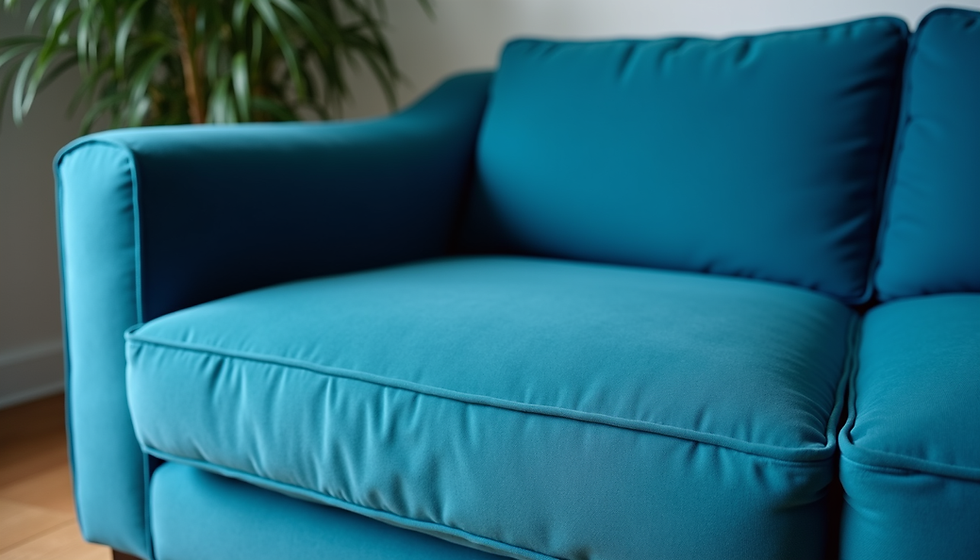
A quality performance velvet can be surprisingly practical in a pet-friendly interior. Its dense pile discourages snagging more effectively than many open weaves, and pet hair often lifts away with a vacuum or soft brush. Velvet also brings depth to a room, particularly in jewel tones, softened neutrals, and rich earth colors that suit traditional, transitional, and contemporary furnishings.
The key is specifying the right velvet. Select a contract-grade or performance construction rather than a delicate decorative velvet intended for occasional use. Pile direction can create a change in appearance after sitting or brushing, and this is part of velvet's character. For households that prefer a perfectly uniform surface, a textured performance weave may be more forgiving.
Microfiber is another practical option, especially for casual family spaces. It is soft, tightly constructed, and often easy to clean. Its visual character is less formal than finely woven upholstery or leather, so it is best used where comfort and easy maintenance are the primary goals.
Solution-dyed acrylic for sunrooms and patios
In Southwest Florida, pet-friendly upholstery often extends beyond the living room. Patio cushions, lanai seating, and sunroom furniture need to contend with sun, humidity, damp bathing suits, and pets coming in from the yard. Solution-dyed acrylic and similar outdoor-grade textiles offer excellent fade resistance and can handle routine exposure to moisture more successfully than conventional indoor fabric.
These materials have advanced significantly in appearance and comfort. Still, outdoor fabric should be specified for the setting rather than used automatically throughout the house. A skilled upholsterer can recommend cushion construction, foam, drainage, and detailing that complement the fabric's performance in a covered or exposed space.
Construction Matters as Much as Fabric
Fabric receives most of the attention, but it cannot compensate for weak cushions, failing webbing, or an unstable frame. Pets tend to use furniture dynamically: jumping onto arms, nesting in corners, pushing against seat backs, and repeatedly favoring one cushion. Those habits reveal structural weaknesses quickly.
A well-executed reupholstery project starts with the frame. Hardwood structure, secure joinery, properly tensioned webbing or springs, and carefully rebuilt padding create the foundation for a long-lasting result. Cushion inserts deserve equal consideration. High-resiliency foam wrapped with a supportive fiber layer usually provides a more durable, tailored seat than low-density foam that compresses prematurely.
For sofas used daily by pets, removable and reversible seat cushions are often practical. They allow for rotation, more thorough cleaning, and more even wear. Loose back cushions can work beautifully, but they require regular shaping. A tight back may be preferable for clients who want a cleaner profile and less day-to-day maintenance.
Details should also be selected with use in mind. Contrast welting can emphasize dirt or wear along edges, while self-welting in the same fabric creates a quieter, more forgiving finish. Skirts may conceal the base of a sofa but collect pet hair. Exposed wood legs simplify cleaning underneath and can make a substantial piece feel lighter.
Color, Pattern, and Texture: The Practical Design Layer
The most durable fabric will still look tired if its color makes every hair, paw print, or bit of lint visible. Rather than choosing a solid color that exactly matches a pet, consider a medium-value fabric with visual movement. Heathered yarns, small-scale patterns, and subtle tonal variation disguise daily evidence of life better than a flat pale solid or a very dark, uniform fabric.
This does not mean pet owners must limit themselves to brown, gray, or beige. Deep blue-green, warm olive, tobacco, muted terracotta, and layered mineral tones can be both sophisticated and forgiving. The room's light is decisive. A fabric that looks understated in a showroom may read much darker in a sun-filled Cape Coral home.
Texture should be approached carefully. Bouclé, loose linen, open weaves, and heavily slubbed fabrics are visually appealing, but they can invite snagging and trap hair. They may be perfectly suitable for an occasional chair in a low-traffic room, yet they are rarely the first recommendation for a sofa that serves as a pet bed, play area, and family gathering place.
Ask for Samples and Test the Real-Life Details
Before committing to yardage, bring samples home. Place them where the furniture will live, view them morning and evening, and hold them next to the pet if possible. Run a fingernail lightly over the surface to see whether the weave catches. Add a drop of water only if the fabric supplier's care guidance permits it, and observe how easily the surface can be blotted.
Ask specific questions about cleaning codes, abrasion testing, fiber content, and whether the material is appropriate for the piece's intended use. Interior designers and homeowners working with an experienced upholstery studio should also discuss the furniture's existing condition. An heirloom chair may need frame repair and new support before it receives its final fabric, while a newer sofa may benefit most from upgraded cushion inserts and a carefully chosen performance textile.
Ahart Upholstery approaches these decisions as part of the larger design and restoration process, helping clients match material performance to the architecture of the piece and the realities of the household.
The best choice is the one that lets furniture be used with confidence rather than guarded with anxiety. When the frame is sound, the cushioning is properly built, and the upholstery suits both the room and the pet, a favorite piece can remain a daily pleasure instead of a daily concern.

Comments