
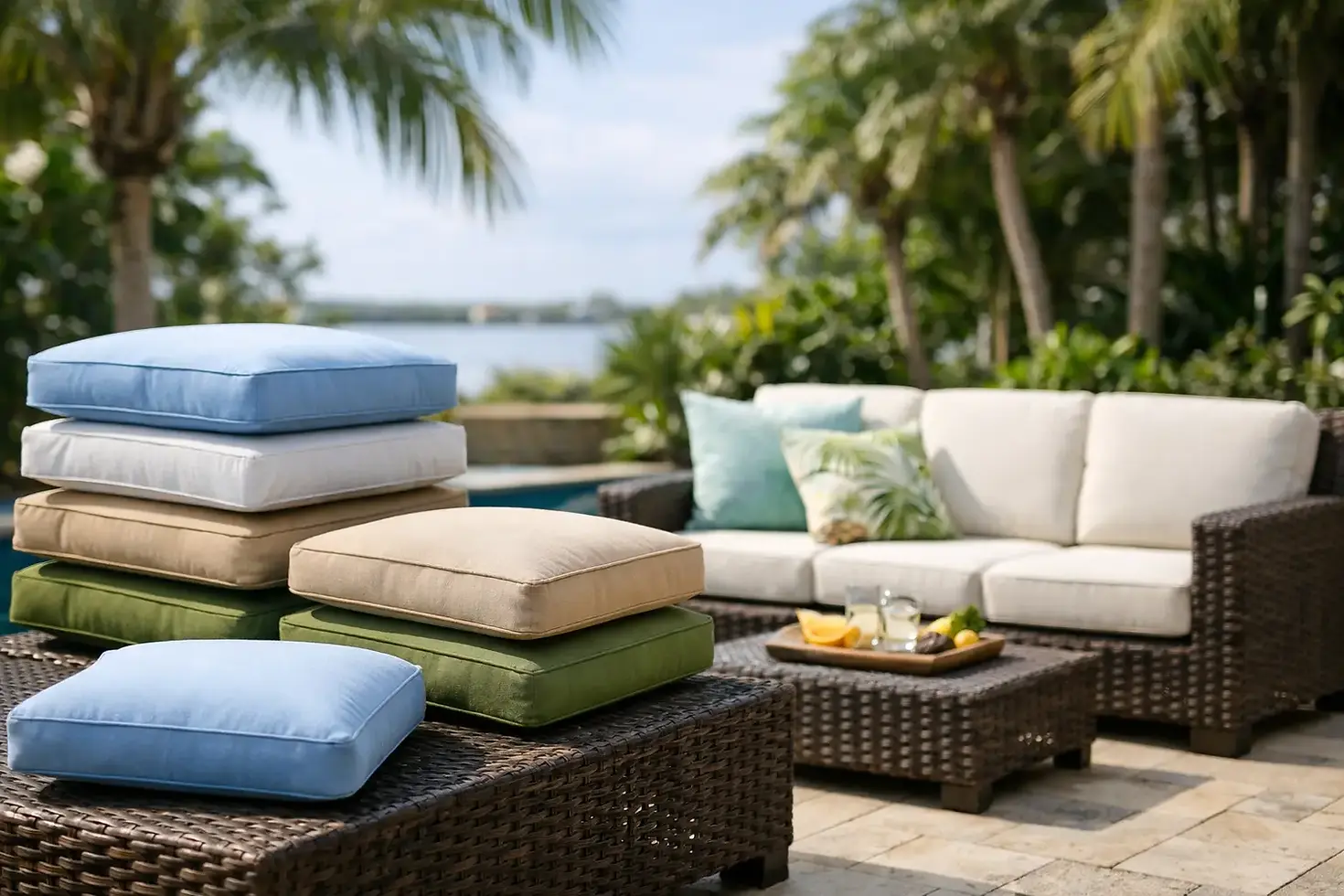
Patio Cushion Replacement for Florida Homes
- ahartupholstery
- Jul 21
- 6 min read
A faded chaise cushion can make an otherwise beautiful lanai feel neglected. Patio cushion replacement is not simply a cosmetic update, especially in Southwest Florida, where sun, humidity, salt air, pool water, and frequent rain challenge every outdoor material. The right replacement cushions restore the comfort and character of an outdoor setting while giving the furniture beneath them a longer, more useful life.
For homeowners and design professionals, the decision is rarely as simple as choosing a color from a shelf. Cushion fit, foam construction, fabric performance, seam placement, and attachment details all affect how a finished piece looks and performs through Florida seasons.
When Patio Cushion Replacement Makes Sense
Replacement is often the better investment when the furniture frame is sound. High-quality aluminum, teak, wrought iron, and well-built wicker furnishings can last for many years, even after their original cushions have lost loft, faded, or become difficult to clean. Discarding a structurally strong frame because the cushions have failed is often unnecessary.
Look beyond surface wear. If cushions feel thin or uneven, retain moisture after rain, show persistent mildew staining, or no longer stay in place, their internal materials may be at the end of their service life. A fresh cover alone can improve appearance, but it cannot correct foam that has broken down, hardened, or begun to retain water.
Custom replacement is also valuable when stock cushions do not fit. Many outdoor furniture collections have distinctive curves, deep seats, angled backs, or unusual attachment points. A loosely fitted cushion can make an expensive frame look temporary. Properly measured cushions preserve the scale and intent of the furniture while making the seating noticeably more comfortable.
Why Outdoor Cushions Fail Faster in Southwest Florida
Florida outdoor living asks more from upholstery than many other climates. Intense ultraviolet exposure can fade fabric and weaken fibers. High humidity encourages mildew where moisture lingers. Afternoon storms can saturate cushions quickly, while coastal air and chlorinated pool environments add further stress to hardware, trims, and textiles.
The most common failure is not always visible at first. Foam can absorb moisture and dry slowly, creating a heavy, damp cushion even when the cover looks acceptable. In other cases, the fabric remains intact but its water repellency has diminished, allowing stains and moisture to penetrate more readily.
Covered lanais receive less direct weather, but they are not exempt from these conditions. Wind-driven rain, humidity, and reflected sunlight still affect cushions placed under a roof. The appropriate material package depends on whether the furniture sits in full sun, near a pool, by the coast, or in a more protected outdoor room.
Patio Cushion Replacement Starts With Construction
A premium outdoor cushion is built in layers, and each layer has a purpose. The visible fabric matters, but the interior determines comfort, drainage, shape retention, and longevity.
Foam Should Match the Exposure Level
For open-air furniture exposed to regular rain, quick-drying outdoor foam is usually the strongest choice. Its open structure allows water to move through rather than remain trapped inside the cushion. It costs more than conventional foam, but that investment can be worthwhile for seating that is frequently exposed to weather.
For a screened or covered lanai, a high-quality outdoor-rated foam may provide excellent comfort and performance without requiring the same drainage capacity. The best choice depends on real conditions, not simply the label attached to the space. A cushion under cover that is routinely wet from wind and rain needs a different approach from one used on a protected porch.
Comfort should be specified rather than assumed. Seat cushions need enough density to support daily use without feeling stiff, while back cushions may use a softer fill or a structured blend designed to keep its shape. The goal is not just a cushion that looks full on installation day, but one that remains supportive after years of use.
Fabric Must Do More Than Look Beautiful
Outdoor fabric selection begins with performance, then moves into color, texture, pattern, and style. Solution-dyed acrylics and other high-performance outdoor textiles are designed to resist fading, moisture, and common stains while still offering the hand and visual depth expected in a refined exterior setting.
Not every fabric marketed for outdoor use performs equally. A fabric may be suitable for a covered patio but less appropriate for full, direct sun. Light colors can reduce heat absorption and create an airy look, though they may show poolside spills or airborne debris more readily. Deep colors can be striking and practical in some settings, but they may become hot in direct sun and can reveal fading over time if the fabric quality is not sufficient.
Texture deserves attention as well. A smooth solid can feel tailored and architectural, while a woven texture or subtle pattern can soften a large sectional or disguise everyday dust. For designers coordinating an outdoor room with interior finishes, custom upholstery offers a far broader range of visual possibilities than ready-made replacements.
Details Protect Fit and Function
Well-executed patio cushions include the small decisions that distinguish custom work. Boxing, welting, topstitching, ties, hook-and-loop tabs, zippers, and reinforced stress points should be selected for the furniture and its environment. These are not merely decorative details.
For example, a bench cushion that slides forward needs a secure attachment method. A dining chair cushion may need carefully placed ties that do not twist or pull against the frame. Zippers should be positioned discreetly while still allowing covers to be removed for cleaning when appropriate. On shaped furniture, proper patterning prevents bunching at corners and keeps seams aligned with the frame.
Measuring for Custom Patio Cushion Replacement
Accurate measurements are essential, but measurements alone do not tell the whole story. The shape of the frame, the angle of the back, the curvature of an arm, and the desired finished thickness all influence the pattern. A cushion measured flat may not fit correctly once it is boxed, filled, and placed against an angled back.
For seat cushions, measure the widest points of the usable seating area, then account for any taper, curve, or obstruction. Back cushions require attention to height, depth, and how they meet the seat cushion. Photographing the furniture from several angles and retaining any original cushions can help document the intended shape and construction.
Avoid adding extra inches in hopes of creating a softer look. Oversized cushions tend to buckle, migrate, and wear prematurely at the edges. A properly fitted cushion has a deliberate appearance: substantial enough to be inviting, yet tailored enough to respect the furniture’s proportions.
Custom Cushions Versus Ready-Made Options
Ready-made cushions can be useful for temporary needs or common chair sizes. They offer speed and a lower initial cost, which can make sense for casual furniture with standard dimensions. The trade-off is limited fabric selection, generalized foam quality, and a fit that may not suit the frame.
Custom work is particularly appropriate for investment-grade furniture, unusual sizes, cohesive outdoor design schemes, and commercial settings where appearance and durability affect guest experience. Restaurants, clubs, hospitality properties, and poolside facilities often need materials that support frequent use while maintaining a polished presentation.
The higher initial cost of custom cushions reflects the labor involved in measuring, patterning, cutting, sewing, and specifying materials for the setting. It also reflects the opportunity to replace only what has failed instead of replacing an entire outdoor furniture collection. When the frame is worth preserving, that can be a sensible long-term decision.
Care That Extends Cushion Life
Even high-performance cushions benefit from regular care. Brush away pollen, leaves, sunscreen residue, and food spills before they settle into the fabric. Clean according to the fabric manufacturer’s instructions, using gentle methods rather than harsh chemicals that can affect finishes or water resistance.
After heavy rain, stand removable cushions on edge when possible so air can circulate. Do not store them wet in a deck box or garage. Breathable protective covers can be useful during extended periods away from home, provided the cushions are dry before covering and the furniture can still ventilate.
A seasonal inspection is also worthwhile. Check seams, zipper function, ties, and the feel of the foam. Addressing a loose seam or minor stain early is far easier than waiting until moisture has reached the cushion interior.
For homeowners and trade professionals in Cape Coral and throughout Southwest Florida, a thoughtful cushion project can make an outdoor room feel newly designed without replacing the furniture that already serves it well. Ahart Upholstery approaches each piece with attention to fit, material performance, and the finish details that allow outdoor seating to look considered rather than merely replaced.
The best time to plan new cushions is before the existing ones become unusable. With the frame, exposure conditions, and intended use clearly evaluated, your patio can remain a comfortable, composed place to gather through every season.


Comments